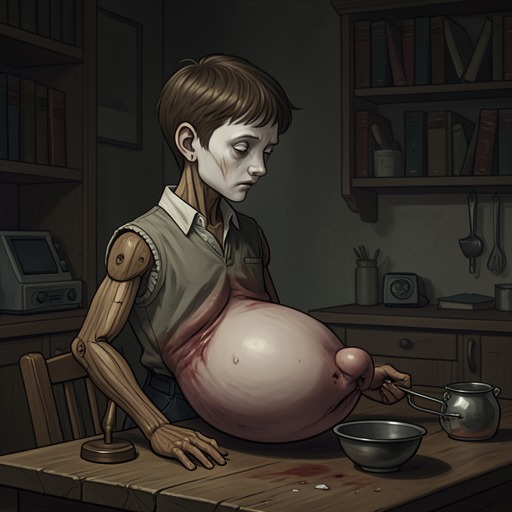
Hunger is the best sauce
The Adventures of PinocchioHunger is the best sauce expresses the idea that appetite can make ordinary food seem especially good. In Pinocchio’s story, its force lies in the contrast between episodes of vulnerability and the vivid appearance of food after a long ordeal: deprivation is part of the world he travels through, while a candlelit table makes sustenance tangible.
Meaning and Narrative Use
The saying treats hunger as a kind of seasoning: the pleasure of eating depends not only on the food but also on the eater’s need. This compact, practical wisdom suits a story in which Pinocchio repeatedly faces the physical consequences of his choices. The proverb’s plainness also fits the book’s child-facing manner, which moves between adventure and lessons grounded in immediate experience.
Hardship and Vulnerability
When Pinocchio is caught in a trap, he screams, weeps, and begs for help, but no houses are in sight and nobody passes along the road. Night falls as pain in his legs and fear of being alone in the dark bring him close to fainting. The scene does not describe a meal; instead, it establishes the bodily distress against which food and comfort elsewhere in the story acquire meaning.
The Meal in the Shark
After leaving the Tunny, Pinocchio walks toward a distant light through a pool of greasy, slippery water with a smell like fish fried in oil. He finds a small table lit by a candle in a glass bottle, beside which an old man eats live fish; some wriggle free and slip beneath the table. The uncanny meal is not presented as a feast, and Pinocchio’s sudden happiness comes from recognizing his father, Geppetto. Still, the scene brings food into sharp focus at the close of an ordeal and places ordinary bodily needs beside the deeper relief of reunion.
A Proverb in an Episodic Story
The saying’s significance is therefore practical rather than abstract: appetite belongs to a world of pain, exposure, and survival. Pinocchio’s adventures repeatedly make material circumstances immediate, whether through the helplessness of being trapped or the strange intimacy of a meal in the Shark’s darkness. Against those scenes, the proverb offers a small measure of worldly wisdom without turning hardship into a grand reward.